

 You’ve likely experienced it: dedicating hours, perhaps days, to setting up a workflow for a project—outlining phases, listing tasks, assigning roles, and incorporating approval steps. It functions well.
Then, a new project begins, and you’re back at square one, recreating the same process.
It’s inefficient. If a process works, why rebuild it each time?
That’s why Planally offers Roadmaps—allowing you to design your workflow once and reuse it across teams, departments, and even entire organizations.
The Challenge of Starting Fresh Every Time
Many teams have established methods, but these often reside in individuals’ memories, outdated documents, or scattered emails. When a new project kicks off, there’s a scramble to reconstruct the process.
 This inconsistency can lead to significant issues:
- Critical documents might be overlooked.
- Essential sign-offs could be missed.
- Steps may be executed out of order.
Such discrepancies result in mistakes, delayed approvals, and diminished quality. Without a consistent system, managing, scaling, or improving becomes a daunting task.
Standardizing project management practices can significantly enhance efficiency and consistency across projects (Project Management Institute, 2005).
Planally Roadmaps: Your Workflow, Made Reusable
With Planally, you can craft Roadmaps that mirror your team’s actual operations.
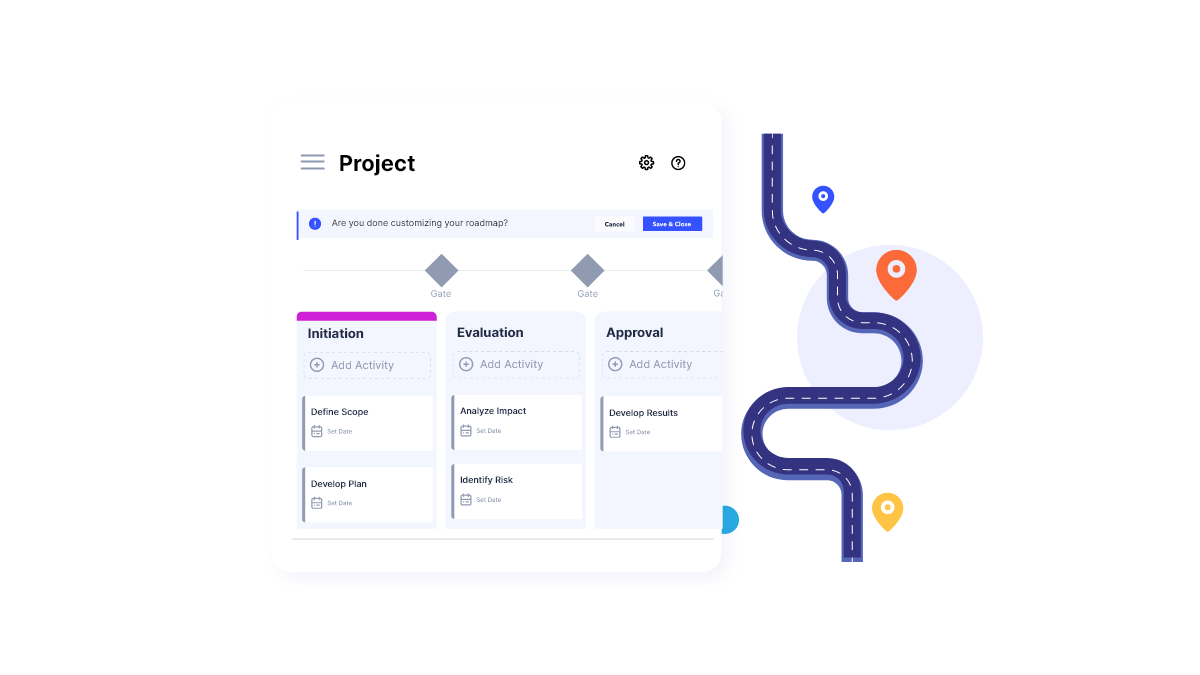 Define your process phases, list tasks under each phase, group tasks by categories (like Engineering, Commercial, or Compliance), assign roles, and incorporate necessary approvals and documents.
Once your Roadmap is established, you won’t need to recreate it for subsequent projects. Simply launch it, maintaining the same structure and clarity, tailored to the new project’s specifics.
This approach renders your workflow repeatable, reliable, and more manageable.
Implementing consistent project management practices can lead to improved efficiency and better project outcomes (Project Management Institute, 2005).
A Real-World Example: One Team, Multiple Projects
Consider managing construction projects across various sites. Each has unique aspects, but the core process remains: planning, permitting, procurement, setup, construction, and handover.
Previously, site teams used disparate tracking methods—spreadsheets, shared drives, or even memory.
This disarray led to:
- Missed critical steps.
- Lost documents.
- Lack of visibility for the head office.
Transitioning to Planally, they developed a Project Roadmap with standardized phases and tasks, grouped into swimlanes by departments like Project, Commercial, Engineering, QA/QC, and Client. Responsibilities were assigned, deliverable requirements set, and approvals integrated before progressing to the next phase.
Now, new projects launch directly from the Roadmap, with site-specific adjustments as needed, but the overarching structure remains consistent.
The outcome?
- Faster project kickoffs.
- No overlooked steps.
- Unified understanding across teams.
- Simplified tracking for the head office.
Utilizing structured project management tools can streamline processes and enhance collaboration (Smartsheet, 2023).
Building a Roadmap in Planally
Start with a frequently repeated process—be it project delivery, contract review, onboarding, or procurement.
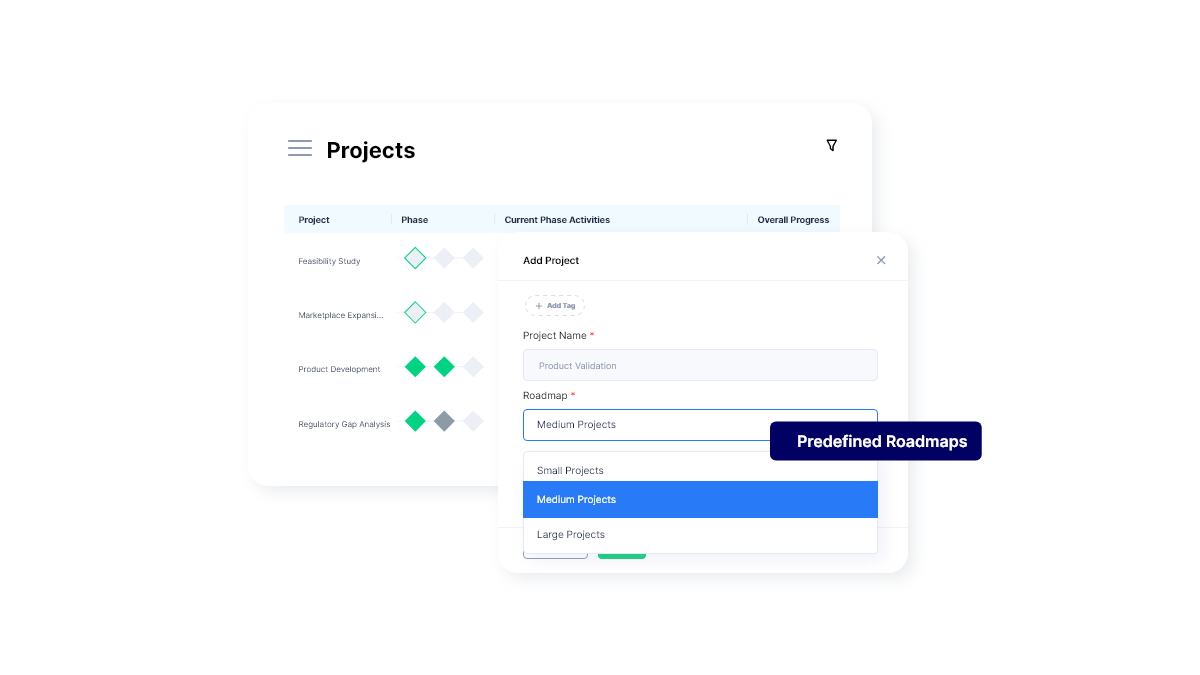 Then:
Then:
- Outline the process phases.
- Detail tasks under each phase.
- Group tasks into categories (teams or departments).
- Assign roles to indicate responsibility.
- Incorporate approval steps where necessary.
- Specify deliverables required before closing a phase.
Save this as a Roadmap. Now, it’s ready for reuse across multiple projects.
Flexibility Within Structure
While Roadmaps provide a solid framework, they remain adaptable.
You can modify tasks, reassign roles, or add steps for specific projects, all while maintaining a consistent foundation. As your processes evolve, updating the Roadmap ensures future projects benefit from these improvements.
The Benefits of Using Roadmaps
Implementing Roadmaps leads to:
- Accelerated setup times.
- Smoother project execution.
- Reduced errors.
- Easier scalability.
- Continuous improvement through iterative updates.
Scaling operations effectively requires structured processes and the ability to adapt to growth (Harvard Business Review, 2023).
Build It Once. Use It Everywhere.
A reliable system enhances team efficiency.
Planally Roadmaps empower you to expedite processes, minimize errors, and consistently deliver results, regardless of project volume or team size.
Don’t reinvent the wheel each time. Design it once. Save it as a Roadmap. Reuse it everywhere.