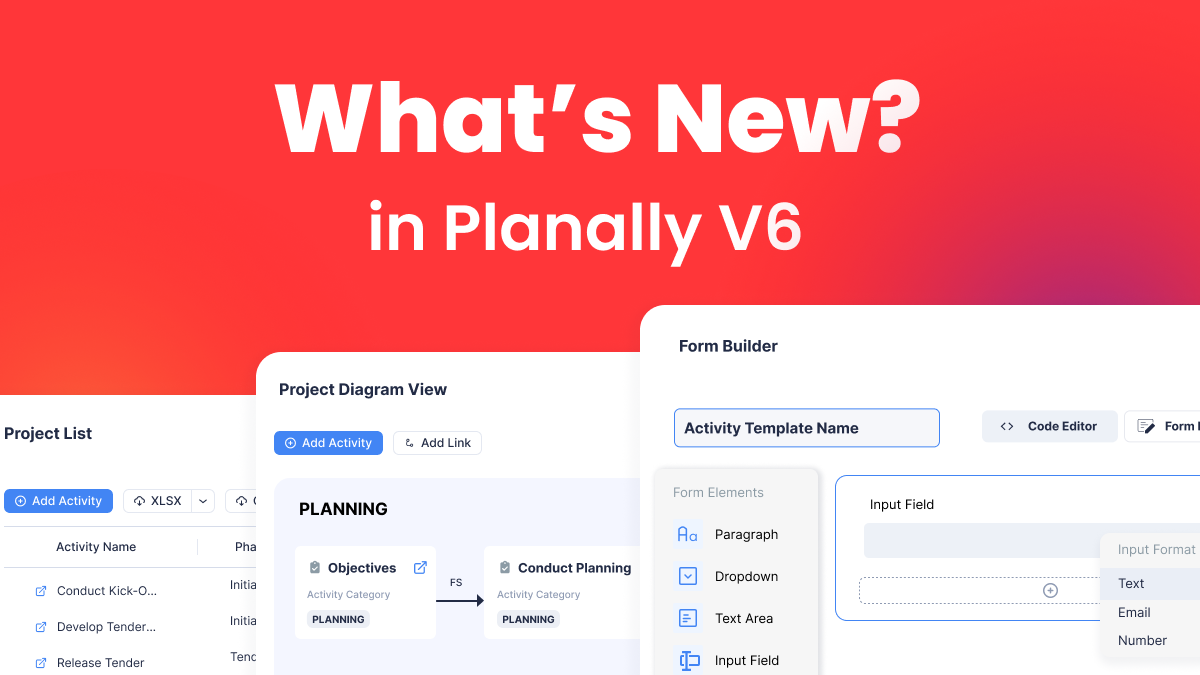


Every decade has its reset moment. The last one gave us cloud computing, agile methods, and a thousand tools promising to make work easier. This decade is exposing the fine print of that promise. The more we digitalize, the more tangled our systems became. Teams now spend more time managing the work rather than doing the work itself.
Enterprises didn’t lose momentum because they lacked technology. They lost it because they built too much technology around too little clarity, a pattern now visible across digital transformation programs where nearly half still fail to meet business expectations.
The lesson is quietly reshaping boardroom conversations. Speed alone is no longer strategy. What organisations are chasing next is coherence — the ability for information, people, and processes to move as one. That shift begins with simplification: removing friction, reducing overlaps, and ensuring that automation amplifies human intent instead of burying it.
Forward-thinking enterprises have already realised that the real breakthrough does not come from new technology stacks. It comes from re-engineering the flow of work before it is automated, turning every digital step into a clear extension of the business logic behind it. This is simplicity not as minimalism but as mastery — the kind that makes complexity behave.
This mindset defines what we call The Great Workflow Reset. It is the quiet revolution where enterprises stop measuring digital progress by the number of tools they deploy and start measuring it by how effortlessly work moves from one stage to the next. It is a return to clarity, purpose, and flow — the foundation of modern enterprise performance that Planally brings to life.
When Digital Transformation Became Digital Overload
The first wave of digital transformation was meant to simplify work. But as each department adopted its own tools, something unintended happened — simplicity got scattered. What began as an effort to centralize soon turned into a patchwork of platforms, each solving a problem in isolation and creating three more in the process.
It wasn’t just software fatigue. It was a quiet erosion of clarity. Teams moved faster, but not always together. Procurement used one platform, audit used another, R&D had its own version of automation, and leadership spent hours reconciling dashboards that were never meant to align. The illusion of control grew with every new login screen.
A 2025 enterprise study revealed that tool proliferation is now one of the top five obstacles to digital transformation, with companies using an average of 89 SaaS applications across core functions. Each app promised efficiency, but together they created a digital sprawl that few could fully manage.

The story was no different on the human side. Another global survey found that as the number of tools increased, employee burnout and operational risk climbed in parallel. Too many systems meant too many decisions, too many notifications, and too little alignment. Work became fragmented, and teams started managing friction instead of outcomes.
This is where most transformation journeys stalled. The focus shifted from impact to integration, from creativity to control. Leaders found themselves in constant firefighting mode, trying to keep information flowing across a digital maze that had no single source of truth. What was supposed to feel empowering began to feel exhausting.
But under that fatigue lies a rare opportunity — to pause and reimagine what digital transformation was meant to achieve in the first place. The organisations that are now pulling ahead are those choosing to simplify. They are consolidating complexity into clarity by returning to the foundation of work itself: the process.
This is precisely where Planally brings coherence back to enterprise workflows. Instead of scattering automation across disconnected tools, Planally lets teams rebuild their processes as phase-based digital workflows, where every phase, activity, and approval lives in one place. It transforms the scattered energy of “too many tools” into one connected system that works the way real organisations do — with ease and direction.
Digital transformation was never supposed to be about the number of systems in play. It was about creating a rhythm of work that people could trust. And that rhythm only returns when enterprises stop chasing more and start building smarter.
The Simplicity Pivot: A Shift from Doing More to Doing Better
There comes a moment when every enterprise realises that faster is not the same as clearer. Speed without structure becomes noise. That moment is where the pivot to simplicity begins.
In the next era of enterprise strategy, the winning organisations are those turning away from tool-driven chaos and instead asking: What workflow actually holds the work together? They are not layering on more systems; they are stripping back to the backbone of how work moves forward — the phases people follow, the forms they complete, the handoffs they trust.
Recent analysis on modern enterprise performance shows that being simple in strategy is no longer optional; it has become essential for unlocking alignment and long-term growth. The shift is subtle yet transformative: innovation is no longer about adding more. It is about making work visible, manageable, and repeatable.
When enterprises build around real business process phases — Initiation → Evaluation → Approval → Execution → Closure — they create clarity. They move from isolated lists to meaningful stages everyone recognises and trusts. What once felt like workflow guesswork becomes a clear, repeatable roadmap. And that clarity becomes the engine of consistency and speed.
For example, teams managing complex functions like Contract Management, Internal Audit, or Research & Development can now model their processes as digital workflow applications that reflect each phase of work — from planning and approval to execution and closure. They are not reinventing the wheel each time; they are building it once and scaling it across the enterprise with ease.
This is exactly where Planally’s phase-based architecture excels. Instead of managing hundreds of disconnected tasks, teams map their process as connected phases. Each phase contains its own activities, forms, and automation rules. The result is total visibility — everyone knows what stage the work is in, who owns it, and what comes next.
It is the kind of clarity that transforms into measurable performance. When teams can see where work stands, decisions become faster, errors drop, and collaboration feels natural again. As workflows become more structured and predictable, organisations begin to shed what experts now call process debt — the accumulation of inefficiencies that quietly slow teams down. It is the same mindset that drives teams to rethink how collaboration happens across complex projects, a theme explored in Planally’s perspective on building better project management through simplicity.
Simplicity is no longer about minimalism; it is about meaning. It is structure, scalability, and calm control, all working together. The pivot to simplicity is no longer just a concept. It is the new foundation of enterprise transformation.
The Process Perspective: Why True Workflows Are Phase-Based
At its core, work isn’t a checklist of tasks. It is a journey through stages — each one defining where we’ve been, where we are, and what comes next. Deep in the heart of enterprise transformation lies the recognition that process-phases, not board columns or task lists, hold the real power.
When organisations map their workflows as sequential phases — Initiation → Evaluation → Approval → Execution → Closure — they transform chaos into clarity. They stop chasing papers, notifications or whose turn it is, and start seeing flow. A recent study on enterprise workflow management shows that the absence of a unified process view costs companies millions annually in rework, handoff delays and overlooked approvals. The case for phase-based workflows is not theoretical — it is now financially visible, as explored in Project Chaos or Project Clarity: The Power of Full Visibility.
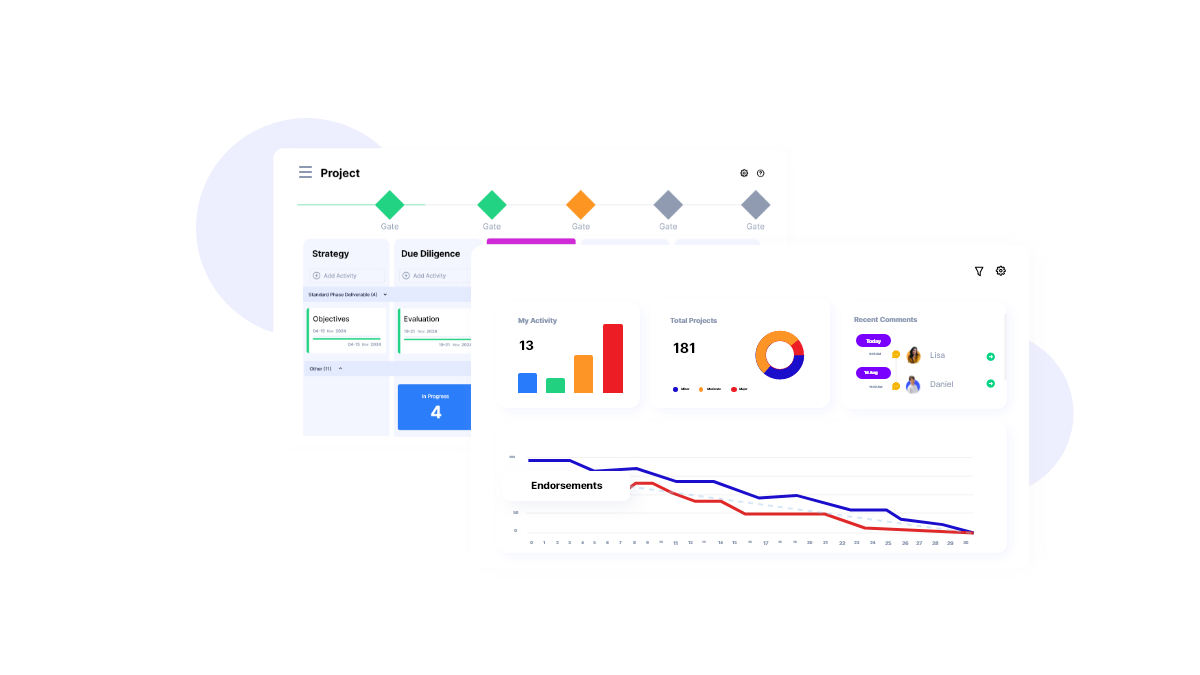
Why does this matter? Because when a process is built around phases, several things happen at once:
- Every activity takes place in a defined stage, so teams know exactly what comes next.
- Hand-offs become deliberate, not accidental.
- Data caught in transition doesn’t vanish — it travels visibly through each phase.
- Automation rules activate only when prerequisites are met; triggers align with business logic.
For example, a contract-approval process in an enterprise might start with a “Request” phase, move into “Sourcing,” then “Evaluation,” proceed to “Approval,” and end with “Purchase.” By modelling it this way, instead of as a list of tasks, the process becomes repeatable, auditable and optimised. With phase-based modelling, you aren’t just tracking tasks — you are tracking progress through real business logic.
That is exactly what Planally enables. With phase-based workflow roadmaps, each phase is not a bucket — it is a milestone. Each phase has its own forms, its own rules, its own automation. Teams can see how work moves from one milestone to the next. Approvals trigger only when the prior phase closes. Notifications fire when the next phase starts. The platform turns hazy work states into transparent segments.
When phase-based workflows live in one connected system, instead of dozens of tools, three major advantages emerge:
- Visibility – Everyone sees what phase a process is in, where delays live and what action is needed.
- Standardisation – Every department executes the same process roadmap, reusing templates instead of reinventing from scratch.
- Governance – Audit trails, permissions and control are built into the stage transitions, not afterthoughts.
This approach to workflow isn’t just “another method.” It is a paradigm shift. In the era of the Great Workflow Reset, companies that adopt phase-based modelling gain more than efficiency — they gain intentionality. They stop managing tasks and start controlling outcomes. They stop reacting and start guiding. They stop fragmenting and start unifying.
When work moves through defined phases, decision-makers don’t ask “What’s been done?” They ask “Which phase are we in?” And instead of chasing tasks, they steer progress. That shift is what real workflow visibility feels like — and what true structure delivers.
Planally: Built for Simplicity That Scales
Scaling exposes everything you didn’t know was fragile. Processes that ran smoothly in a single department start to strain across regions. What once worked in pilot projects breaks under enterprise weight. The truth is, scaling doesn’t fail because teams lack effort, it fails because complexity multiplies faster than clarity.
The next generation of enterprise transformation isn’t about expanding toolsets. It’s about scaling structure. It’s about systems that grow wider without losing their rhythm. That’s where the power of simplicity takes center stage.
Organisations that invest in simpler process architecture are now seeing measurable gains in performance and alignment, proving that clarity scales better than control. Simplicity, it turns out, isn’t about reduction. It’s about design — about making complexity behave at scale.
Phase-Based Roadmaps That Flex with Growth
With Planally, workflows scale because they’re built on phases, not fragments. Each process — whether it’s Contract Management, Internal Audit, or R&D — follows a roadmap like Initiation → Evaluation → Approval → Execution → Closure. Each phase contains its own forms, rules, and automation logic, turning every process into a living, scalable system.
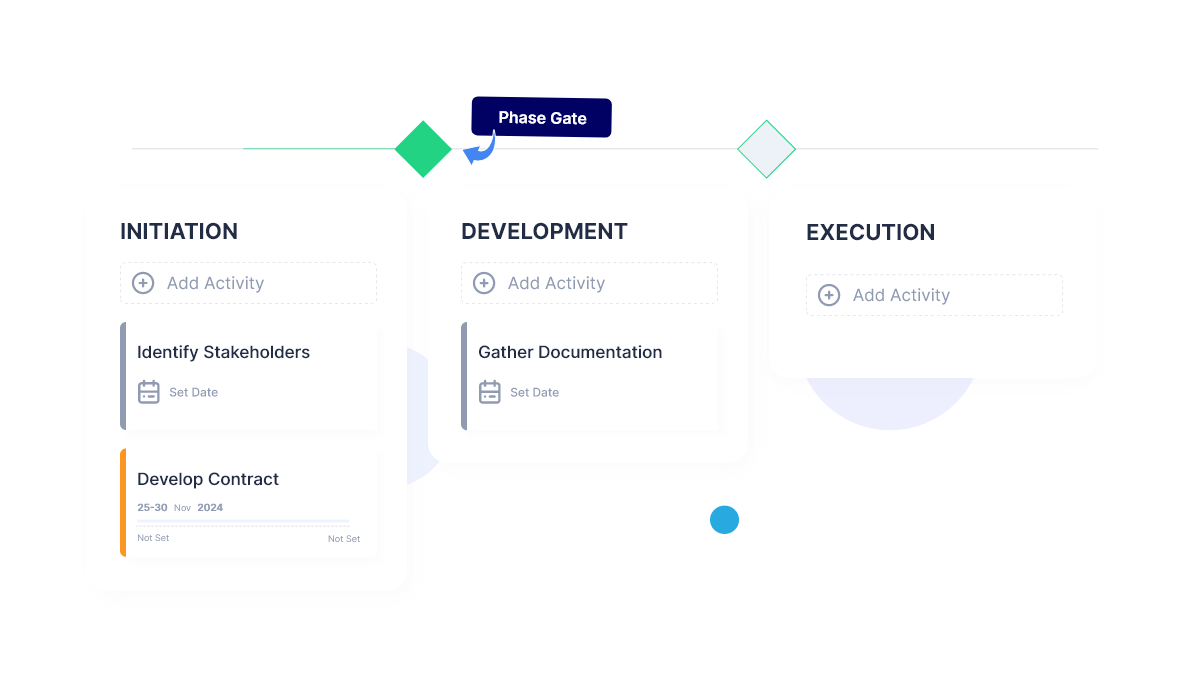
Instead of adding more tools to manage growth, teams use Planally’s no-code workflow apps to replicate success. A workflow built for one department becomes a template for another. The same structure that runs a local approval process can power an entire global rollout.
Freedom Without Losing Control
Traditional scaling means handing control to IT or consultants. Planally flips that model. Teams can build, modify, and deploy workflow applications independently, while enterprise leaders maintain governance, permissions, and audit trails from a single connected platform. This is how simplicity becomes operational freedom — a balance between agility and oversight.
Enterprises using this model find that visibility grows with scale, not against it. As each department plugs into the same framework, the organisation begins to function as a unified ecosystem instead of a collection of disconnected initiatives. It’s how many PMOs today achieve clarity and control through structured, intelligent workflows that guide progress naturally.
Governance and Growth in the Same Frame
Scaling often introduces blind spots — gaps between teams, data, and accountability. With Planally, governance isn’t an afterthought; it’s built into the structure of every phase. Audit trails, permissions, and automated approvals are part of the workflow DNA. Every change is traceable. Every handoff is visible.
This shift in architecture breaks down the very barriers that slow scaling. The invisible friction caused by data silos, repetitive manual work, and fragmented systems begins to fade — the same transformation that happens when collaboration moves beyond silos and into shared visibility.
Simplicity at Scale Becomes a Superpower
When clarity scales, growth feels effortless. Teams don’t lose control as they expand. They gain it. Decision-making accelerates because everyone works from a single source of truth. Compliance strengthens because governance lives inside every workflow. And innovation speeds up because structure, not chaos, is what powers creativity.
Planally was built for this moment — where enterprises can scale confidently without complexity shadowing every step. It’s simplicity engineered for growth.
Why Simplicity Is the New Enterprise Edge
Every wave of enterprise innovation leaves a lesson behind. The first wave taught us to move fast. The next taught us to scale. This one is teaching us something quieter but far more powerful — that simplicity is the new edge.
Across industries, leaders are realising that the advantage doesn’t come from doing more. It comes from removing the noise that slows everyone down. The ability to keep things simple has become a defining marker of digital maturity. Not simple in output, but simple in structure — where every part of the system knows exactly what it supports, and nothing works harder than it needs to.
What most organisations call complexity is often just the absence of structure. It’s what happens when processes evolve faster than the systems that hold them. The result is a growing gap between how work is planned and how it actually flows. Closing that gap is where simplicity turns into strategy.
Studies now show that enterprises that prioritise simplicity in their system design outperform peers in agility, alignment, and execution speed. When processes are phase-based and transparent, teams stop working in silos and start working in sync. Decisions become faster. Errors fade quietly into the background. Accountability feels built in.
This is what Planally’s platform is built to deliver. It replaces fragmented systems with a single connected rhythm — one where every workflow moves through clear phases, and every stakeholder has the same line of sight. It’s simplicity in action, designed for scale.
When simplicity becomes part of the system, something shifts across the organisation. Leaders stop chasing data and start using it. Teams stop coordinating tasks and start achieving flow. Growth stops feeling heavy and starts feeling natural.
Simplicity isn’t just efficient. It’s empowering. It gives enterprises room to breathe, space to adapt, and the confidence to scale without friction.
The Great Workflow Reset is proving one thing above all — in a world built on speed, the real advantage now belongs to those who can stay clear.
The Great Workflow Reset: A New Kind of Digital Maturity
Every transformation reaches a point of reflection, the moment when technology meets truth. For enterprises everywhere, that moment is now. After years of running faster, building more, and connecting everything, the question has shifted from “What can we automate?” to “What actually matters?”
This is the essence of the Great Workflow Reset. It is not about abandoning progress. It is about refining it. It is about building systems that think the way organisations do: structured, visible, and simple enough to be trusted.
Digital maturity is no longer measured by how advanced your tech stack is. It is measured by how seamlessly your work moves through it. The mature enterprise does not chase the next integration or the next dashboard. It builds around clarity, one connected process at a time.
That is why simplicity has become the true measure of progress. When workflows are designed around phases, teams do not lose themselves in the noise of activity. They move with confidence through a roadmap that mirrors how work really happens. Every stage adds meaning. Every step has context.
Planally embodies this new definition of maturity. It is not another layer on top of the enterprise; it is the framework beneath it. With phase-based workflows, automated approvals, and real-time visibility, Planally brings order to the moving parts of complex organisations. It replaces friction with flow and gives leaders the ability to see, decide, and act with precision.
Enterprises embracing this mindset are not just transforming their workflows. They are transforming their culture. Meetings become shorter because everyone already knows what is happening. Reports become clearer because data tells the story itself. And growth stops being reactive; it becomes deliberate.
This is not just the future of workflow. It is the future of work. A place where structure amplifies creativity, where visibility builds trust, and where simplicity becomes the new form of intelligence.
That is what the Great Workflow Reset represents: a return to clarity, an evolution of purpose, and a commitment to work that works.
If your organisation is ready to explore what that shift looks like, you can connect with Planally to see how simplicity can redefine the way your enterprise runs.
Digital maturity is not about more technology. It is about better flow, and that is where the reset begins.
Frequently Asked Questions
What is the Great Workflow Reset?
The Great Workflow Reset is the shift from overcomplicated, tool-heavy systems toward structured simplicity. Instead of managing dozens of disconnected platforms, enterprises are now building clarity-first workflows that reflect real business phases. This approach enables visibility, consistency, and faster decision-making — redefining how work flows through modern organisations.
Why does simplicity matter in enterprise workflows?
Simplicity has become a strategic advantage. When workflows are structured and intuitive, teams spend less time managing tools and more time delivering results. Clear, phase-based workflows reduce duplication, eliminate confusion, and make progress visible. For enterprises, this means faster approvals, stronger governance, and higher adaptability in a rapidly changing business landscape.
How does Planally make complex workflows simple?
Planally turns real business processes into phase-based digital workflows that mirror how organisations actually work. Each phase contains its own activities, forms, and automation rules, giving teams total visibility and control. The result is a unified platform where work moves logically from initiation to closure — without the chaos of scattered tools or manual tracking.
How is Planally different from traditional workflow tools?
Traditional workflow tools manage tasks; Planally manages processes. Instead of lists or boards, it builds digital workflow applications that reflect end-to-end business logic. Every workflow is phase-based, meaning each stage carries its own structure, automation, and approvals. This allows organisations to model and scale processes with ease, precision, and standardisation.
What kind of enterprises benefit most from Planally?
Planally is built for any organisation — from growing startups to large enterprises — that runs structured business processes and wants to manage them with clarity and control. Whether it’s planning projects, managing contracts, launching new products, driving business improvement, overseeing capital investments, tracking R&D initiatives, conducting internal audits, running go-to-market campaigns, or coordinating enterprise-wide IT PMOs, Planally adapts to any workflow with ease. It turns every process, regardless of size or industry, into a connected, phase-based digital workflow that scales seamlessly across teams and departments.
How does simplicity impact digital maturity?
Digital maturity used to be defined by the number of systems in place. Now it’s measured by how seamlessly work moves through them. Simplicity accelerates maturity by aligning people, data, and processes in one connected flow. It turns automation from a patchwork of tools into a cohesive ecosystem that scales intelligently and sustainably.